Why Marine Conservation Nonprofits Matter, and How to Support One in the Florida Keys
By Art of the Seas
Marine conservation nonprofits matter because the ocean cannot defend itself, and the agencies charged with protecting it cannot be everywhere at once. These are the organizations that restore damaged reefs, teach the next generation to care, pay for the science, and give ordinary people a real way to help. Here is what the best ones actually do, and how you can back one that is already in the water in the Florida Keys.
Why marine conservation nonprofits matter
The ocean is not an endless resource, and the reef is where you see that first.Coral reefs cover less than one percent of the ocean floor, yet they shelter about a quarter of all marine life, according to NOAA. When a reef goes quiet, the loss does not stay underwater. Fisheries thin out, the coastline loses the barrier that softens a storm, and the people who live and work on that water feel it before anyone else does.
Government agencies and universities do serious work, but they are stretched thin and slow to move. That is the gap a nonprofit fills. It works locally, moves quickly, and brings together the two things conservation never has enough of: people and money. A good marine nonprofit takes a diver, a teacher, an artist, or a first-time donor and turns them into part of the repair.
The ocean does not need a few people doing conservation perfectly. It needs a lot of us doing it together.
What a marine conservation nonprofit actually does
The ones worth supporting tend to work on four fronts at once, and the fronts hold each other up.
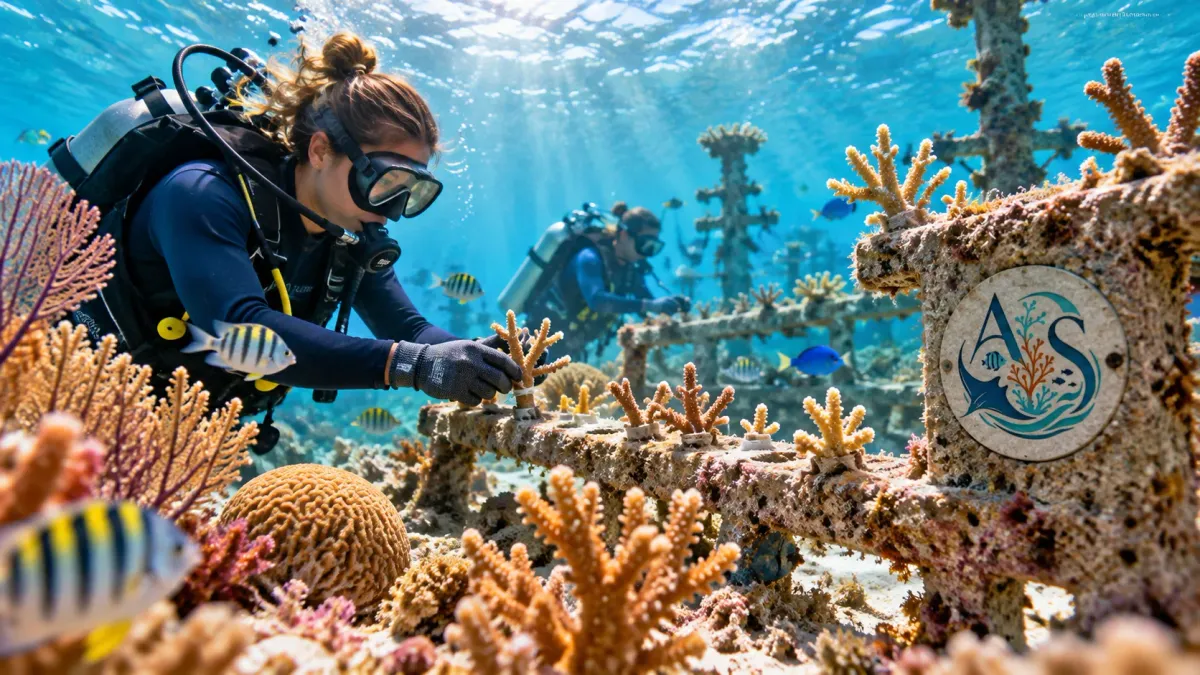
Restoration.They rebuild what was lost: growing and replanting coral, sinking artificial reefs that give marine life somewhere to start over, and bringing back seagrass, mangroves, and the quiet species that keep a reef running.
Education.They raise the next generation of people who will care. School programs, hands-on learning, and free resources turn a curious kid into an adult who protects the water for decades.
Research and science.They collect the data that tells you what is actually working: what survives, what fails, and why. That is the line between wishful thinking and a reef that comes back.
Community.They give people a door in. Volunteer days, memberships, partnerships, and events mean the mission belongs to a whole community, not just a payroll.
How Art of the Seas makes a difference
Art of the Seas is a 501(c)(3) working in the Florida Keys, and we put those four fronts together in a way you do not see often.
We restore the whole reef, not just the coral. We design and sink eco-friendly artificial reefsthat pair human artistry with marine science, so coral, fish, and reef-building sponges all have somewhere solid to take hold. It takes longer than planting coral on its own. It is also how you get a reef that is still there in ten years.
We start with kids. Ocean education is our launch focus, because the surest way to protect the sea for the long haul is to raise a generation that already loves it. Our programs turn marine science into something a child can see, touch, and keep.
And we put art and the ocean in the same sentence. No other restoration effort turns a sculpture into a living reef the way we do. Art pulls people in, pays for the work, and makes conservation something you can hang on a wall and stand behind.
How to support a marine conservation nonprofit
You do not need a wetsuit to help. Here are the ways that actually move the needle, whether you live on the water or nowhere near it.
Give, and make it monthly if you can. A recurring gift is the most useful thing a donor can do, because it lets a nonprofit plan the next reef instead of praying for it.
Sponsor something you can point to. A named reef base, a school program, an event. Sponsorship ties your name, or your company's, to a result you can actually see.
Volunteer your time or your trade. Restoration needs hands in the water, and it also needs photographers, teachers, builders, and people who can tell the story.
Become a member. Membership turns a one-time supporter into part of the crew, and steady members are what keep a nonprofit standing on its own.
Use your voice.Share the work, bring a friend to an event, and talk about the ocean like it belongs to all of us, because it does.
Join us
The Florida Keys hold some of the most important reefs in the country, and they need people willing to show up for them. If you have been looking for a way to help the ocean that is real, local, and something you can trace, you just found it.
Frequently asked questions
What is a marine conservation nonprofit?
It is a mission-driven organization, usually a registered 501(c)(3), that protects and restores ocean life through work like reef restoration, marine education, scientific research, and community programs. It is funded by donations, memberships, sponsors, and grants rather than by selling a product.
Why are coral reefs so important?
Coral reefs cover less than one percent of the ocean floor but support about a quarter of all marine life, according to NOAA. They also protect coastlines from storms and sustain the fisheries and tourism that many coastal communities rely on.
How can I help protect the ocean if I do not live near the coast?
You can donate or become a member of a marine nonprofit, sponsor a reef or a school program, and share their work. Distance does not limit impact. Steady support from inland gives coastal restoration the funding it needs to continue.
How do I know my donation actually makes a difference?
Look for a nonprofit that publishes what it does with its funding and ties support to specific results, like reefs built or students reached. Art of the Seas is committed to that kind of plain-language transparency, so every dollar you give is a dollar you can follow.
Support the reef, right here in the Keys
Your support funds the reefs we build, the students we teach, and the science that brings the ocean back to life.
Reference: NOAA, National Ocean Service. Coral reefs support an estimated 25 percent of all marine life despite covering less than 1 percent of the ocean floor.oceanservice.noaa.gov/facts/coral_habitat.html
